About One DNP

I earned my "terminal practice" degree in nursing from the University of Tennessee Health Sciences Center in a journey of excitement and challenge. It inspired me to advocate for an all encompassing clinical credential rather than continuing the hodgepodge of nonsensical initials. I hope these entries will provide entertainment and insight into the Doctor of Nursing Practice experience, which will soon be the entry standard for all advanced practice nurses.
Showing posts with label APNA. Show all posts

Sunday, October 26, 2014

APNA14: You Can't Learn Mindfulness in a Weekend Workshop

Conferencing with an infant is certainly a unique experience! I had a blast reconnecting with many of my teachers and mentors while getting an infusion of professional and EBP goodness, though I must admit I missed my UT-DNP peeps.  Every year I get to add to my list of memorable interpretive quotes and insights from the APNA conference, and APNA 14 was no exception. I am going to forgo an in-depth recap of this year's events and share some of my favorite gems. If you were there, you know who and where they came from!

  • We don't give enough credit to how difficult it is to be fully present

  • Mindfulness is the antidote to mind wandering and time travel

  • Nurses feel they have to be twice as good to be any good

  • Perfect is the enemy of good

  • Negotiation of difference is what we all have in common

  • Assessment tools without the patient narrative assess very little

  • In nursing, you can have a mid-life crisis every 7-years

  • If you can't squeeze water out of a rock, don't blame the rock

  • Nursing as a fall-back position is not exactly what you would call a career path

  • I hope to have at least two more disclosures by the end of the month

I am already looking forward to APNA15 in Disney World - if it isn't the happiest place on earth when the psych nurses get there, believe it will be by the time we leave!

Saturday, April 12, 2014

Abstract Accepted!

For the fourth year running, I am honored to have a presentation accepted for the American Psychiatric Nurses Association annual conference. As with most topics, you can tell what is going on personally by what I present professionally. This one is especially meaningful because I am stepping out of my clinical comfort zone to do the research while having the perspective as both provider and patient. In keeping to my roots, references will be available via my social network sites - stay tuned for the pinterest board!


Grieving Though Grateful: Reconciling the Traumatic and Disappointing Birth Experience

Purpose*
When a woman experiences a traumatic or disappointing birth, there often exists an emotional dichotomy between gratefulness for the child and grief toward the the experience.  This presentation describes characteristics that contribute to traumatic birth and resources for the PMH nurse to aid in prevention, diagnosis, treatment, and collaboration.


Summary of evidence*
Though up to 30% of women world-wide experience traumatic birth, a review of the literature reveals a paucity of research, and the DSM-5 lacks discussion in the sections on perinatal mood disorders, trauma and stress-related disorders, or bereavement.


Description of practice or protocol*
Traumatic birth may be missed or mistaken for other postpartum mood disorders by clinicians, and under-reported by mothers due to stigma. Platitudes such as "all that matters is a healthy baby" minimize and invalidate the mother's grief toward the experience and contribute to feelings of guilt, anger, helplessness, or diminished self-esteem.


Validation of Evidence / Method of Evaluation*
Factors including psychiatric history, unplanned or emergent obstetric intervention, pain, loss of control, and lack of interpersonal support contribute to negative birth experiences, and put the mother at risk for ineffective maternal role attainment and mental health disorders.


Relevance to PMH Nursing / Results*
A comprehensive  understanding of traumatic birth provides the PMH nurse a foundation for enhanced assessment, intervention, integrative strategies, and interdisciplinary collaboration to help women at risk for or experienced traumatic birth.


Future implications*
Birth is not a mearly a means to an end, but an experience independent of the outcome.  Understanding the risk factors, characteristics, and resources results in refined diagnosis, effective treatment planning, and the opportunity to build connections with peer obstetric clinicians.

Sunday, October 6, 2013

APNA 2013 Poster

 
I have been on a writing hiatus. Between the new position at work and being 28 weeks pregnant, I am out of the habit of blogging. Though I would have really enjoyed doing a podium presentation again, I had a feeling it might have been more than I could tack on to an already packed schedule. . . as evidenced by the fact I just completed and ordered the hardcopy today and am leaving on Wednesday for the conference. This was really a fun one to research over the past few months, and I am looking forward to another great APNA conference. See you there! 


Wednesday, April 17, 2013

APNA27 Abstract Accepted

Wow! Three years running I have been honored to have my work accepted at the American Psychiatric Nurses Association Annual Conference. I have put to rest my social networking research and gone back to my roots of practice and interest.  Check out the summery, and get ready for APNA27 this October in San Antonio!

 Serotonin OTC: The Latest in Mental Health Nutraceuticals 

Abstract:  The U.S. vitamin and supplement industry grosses nearly $30 billion per year with a growing number of products targeted to the prevention and alleviation of mental health related conditions. Although the industry is regulated by the FDA and products must adhere to Good Manufacturing Practices (GMP), broad claims of efficacy for mood, sleep, concentration, and other general psychiatric symptoms are not subject to scientific validation. Popular nutraceuticals including GABA, n-acetylcysteine (NAC), and Ashwagandha are advertised as natural alternatives or augmenters to standard psycho-pharmacy, and while consumers who self-medicate without informing their providers may experience a measurable benefit, they put themselves at risk for deleterious outcomes. Consumer interest, desire to decrease pill burden, and product proliferation in the marketplace have encouraged increased research to substantiate health claims, determine potential interactions with medication, and provide a basis for recommendation. This presentation will provide an overview of the functions of 10 common and novel mental health focused nutraceuticals, evaluate the base of evidence for implementation into practice, and provide strategies for educating patients on appropriate use of OTC supplements.

Presentation Summary:  This presentation provides an overview of the functions of common and novel mental health focused nutraceuticals, evaluates the base of evidence for implementation into practice, and provides strategies for educating patients on appropriate use of OTC supplements.

Objective 1:  Identify the key functions of 10 nutraceuticals supplements frequently used in management of mental health disorders.
Objective 2:  Describe potential interactions between classes of psychiatric medication and OTC mental health nutraceuticals.
Objective 3:  Evaluate the evidence base for use of OTC mental health supplements in PMH practice

Tuesday, February 5, 2013

Associations That Care About You, Not Your Lawn

Yep, I live in a traditional town neighborhood. I love the throwback architecture and planning, that I can walk to my clinic, do not need to worry about driving if I have a few cocktails at one of the restaurants, and can get all kinds of unique gifts from small business owners without having to fight traffic at the mall. And yep, I pay a higher dollar per square foot for my house and business properties and owe yearly and monthly association dues for the privilege of living in a southeast replica of The Truman Show.  Every once in a while, someone gets complaining about dog messes, unapproved plants, fences painted the wrong color, or some other inane issue that makes the front office puff up their chest and point fingers with threats of "or else." When this happens, my husband starts pulling up the real estate section and yearning for a couple acres of property away from people and their meddling rules. Make that Federation Rules, if we happen to be on a Star Trek kick.

So the point of this mini rant is the question, "what do nursing associations really do for me?" 

As an RN student, I did not see the point of membership in professional nurse associations, largely because it was never emphasized in my leadership class. With loans coming due and taking on a new mortgage payment, spending money on membership was not a priority. Shortly after getting my license, however, I did become a member of the American Holistic Nurses Association as it fit with both my new nursing role and practice as an acupuncture and Oriental medicine provider. I also joined Sigma Theta Tau when I was nominated both from my undergraduate and doctoral programs. Other than a free journal and random emails, I was too busy getting my nurse legs to really look at the whats and whys of these organizations or to get involved in any way.

When I started my FNP training, one of the first things we discussed was the importance of joining state and national associations and what they do for us. Advocacy for NPs to practice autonomously to their full scope of training is one of the main activities. Live and distance continuing education applicable to practice is another important aspect, and membership typically provides substantial discounts. On-line member forums to collaborate on practice and legislative issues, find mentors, and cultivate relationships that often start from live networking at conferences is one of my favorite benefits. There are also some discounts or freebies on re/certification, related memberships, journal subscriptions, and other tangible goodies.

Despite these incentives, if I were to join every association that represented my professional interests, I would have to give up a lot of my discretionary time and funds.  Here is a sampling of just some of the key ones in nursing:

American Nurses Association ($291 /yr with mandatory state membership in KY)
Kentucky Coalition of Nurse Practitioners and Midwives ($95/year)
National League for Nursing ($115/yr),
American Holistic Nurses Association ($125/year)
International Society of Psychiatric-Mental Health Nurses ($125/yr)
Nurse Organization of Veterans Affairs ($105/yr)
Sigma Theta Tau International Honor Society of Nursing ($104.50 and $109.50/yr for both chapters)


While I have been or would like to be a current member of these organizations, like all good nurses, I have to prioritize. My basis for choosing an association is related to my current role and what I feel I can contribute the most time toward as an active member. I am continually a member of the American Psychiatric Nurses Association  ($125/yr) because they represent all psych/mental health nurses, not just NPs. The conferences are well organized and clinically relevant, the member bridge is functional and informative, they really try to involve all members in task forces and outreach representations, and they fund the state organizations to promote involvement at the local level without additional dues.  The mission of APNA is educational, rather than political,  so the dues are 100% tax deductible. They use social media effectively to promote the profession and increase care quality while reducing stigma of the population we work with. Plus, its an evidenced-based fact that psych nurses have more fun, which is why I have not missed a conference since joining!

I recently decided it was time to join the newly merged and powerful American Association of Nurse Practitioners ($125/yr). Now that the two main NP organizations have agreed to speak with one voice, there will be a stronger, more cohesive representation our collective interests. The AANP is another organization active on social media, they have direct legislative involvement so some of the membership dues fund the push for independent practice, they run a daily RSS feed to keep members current on activities applying to all practice aspects, and they represent all APRNs so those of us who may be loosing a skill here and there can catch-up or acquire new competencies at the annual conference.

Did I mention the AANP decided to have their annual conference for 2013 in Las Vegas? That's right. Vegas, baby.  The Venetian better be ready for OUR action!

For those of you going, make sure you live-Tweet using #AANP13 - lets get it trending!

Nurses are the most populous of health providers, yet we have one of the weakest voices and are underrepresented throughout the LPN, RN, and APRN practice levels. Most of us want higher pay or reimbursement, more respect, and the ability to practice to the full scope of our training. Increasing the number of active member nurses from all educational levels is essential for strengthening our position at the legislative table and owning our profession to accomplish these goals.

Join and be active!

Tuesday, November 20, 2012

Nurse Fight, Revisited.

At the 2010 APNA conference I was a newb to the plight of the Clinical Nurse Specialist phase-out. I listened, I empathized, and I agreed wholeheartedly that it was not fair. However, very little is fair in healthcare, and roles in all disciplines are continually merged, eliminated, grandfathered, or otherwise changed for the greater good of the consumer and the economy. Two years later I am hearing the same arguments resentments and resistance to continuing education and not a single course of action beyond "someone should do something."

Yes, the CNS role in mental health was there before the NP. While I profess enduring gratitude to these pioneers, being first is not a relevant reason for continuance of a role that is being incorporated into the now-dominant nurse practitioner certification. The psychotherapy skills at the core of CNS education are now part of most NP programs and total more hours than were required in the first CNS programs. This is particularly true for those pursuing the DNP. Individual future-NPs may be drawn to one aspect of practice than another, and can choose programs that fit their emphasis area of interest, but the core requirements set forth from the ANCC must be met, whether you want to write scripts all day, facilitate therapy, or lead process improvement projects. If you are in healthcare, you should be dedicated to life-long learning whether it is to maintain or update certification.  I am sure at some point, the American Board of Comprehensive Care exam - a ridiculously 
conceived and unvetted rip-off of the 3rd step of the USMLE -  will be required for certification or recertification in Family/Adult NP practice, at which time I will have to suck it up and take it (but not one second sooner than mandated, and I will be protesting it up to that second).


Yes, the CNS has paved the way for expansion in scope of practice by consistently providing cost-effective, outcome-driven, patient-centered care. Again, we would not be where we are today without these leaders, however, maintaining the high level of respectability and competence that has been cultivated comes from didactic and clinical education at the graduate (soon doctoral) level, and finding mentors in the first years of practice - the roles are not mutually exclusive. PMH providers are already thought of as the "not-a-real" arm of our parent disciplines, do we really want to separate ourselves further by advocating for two of the same with a different name? Are taking any of the 3Ps and sending off for a transcript really that professionally insulting? Could it not be viewed as an expanded practice update, just as our yearly CEU requirements are mandated? I went to a PMHNP/DNP program that was attended by CNSs who wanted to keep current. They did not have to retake clinical hours or classes, and their educational plans were tailored to their experiences. The money and time spent to convert from a CNS to a NP (with a DNP if you want to keep REALLY current) would provide all the necessary CEUs for state licensing or national credentialing and, depending on the program, cost less than a couple of national conferences.

Yes, the CNS in PMH is different than the CNS role is in other nursing specialties because of the emphasis on direct patient care rather than nursing education, organization, and leadership. The current roles of the NP and CNS in mental health have become increasingly redundant because we let it get that way. It is too late to go back in time and decide not to start PMH NP programs and restrict advanced PMH practice to the CNS designation, or to ensure the PMH CNS role stay in line with the CNS role in other advanced nursing specialties. It is ridiculous enough that advanced practice nursing is divided into four roles with six population foci (instead of one APRN designation with specialization - a soapbox for another time), but having 2 roles with the same foci is just sloppy. This is why the consensus model supported the retirement of other CNS specialties that overlap with NP practice (adult health, adult psych, child/ado psych, gerontology) and retirement or amendment of NP specialties that were too specific or did not include lifespan.


Yes, by supporting the APRN consensus model, the APNA did not advocate to keep the PMH CNS educational programs open throughout the country nor petition the ANCC to keep the certification exam active. I understand being upset at APNA for not advocating to keep the credential - every one of my mentors is now or started as a CNS - but the organization represents all psych nurses from vocational to doctoral degree. At any given time, some of the groups within the greater organization are going to feel their interests have been ignored. The APNA cannot dictate to profit-driven universities and certifying organizations how to conduct their business. The ANCC, who is responsible for administering, maintaining, and offering the certification, made the decision to discontinue the CNS designation, in part because universities have been phasing-out or incorporating CNS education into NP programs long before LACE. We can talk about how great CNS's are valued to patients, peers, and healthcare systems, but the hard truth here is the only argument that really matters is the economic argument. Frankly, I am shocked the AANP did not develop a limited-time bridge-exam for CNS-to-PMH just for the financial competition (tell me again why nursing has 2 certification bodies for advanced practice? Another soapbox for later). Universities and certification organizations are not making enough revenue to keep the PMH CNS viable. No money, no ticket.

Yes, nursing changes the rules more than other health discipline. Why? From entry to master, there are more people who call themselves "nurse" than any other health profession. We have to change to keep current and to define, grow, and protect our scope of practice. This often-labled "betrayal" of our own may be more common, but it is not at all unique to nursing. If one were to ask bachelors-prepared physical therapists, masters-prepared psychologists, pharmacologists without an MD or other doctoral healthcare degree, a masters prepared pharmacist before 1994, or MDs who find their primary practice certifications compartmentalized into new ABMS categories, they would empathize to varying degrees with what is happening to the CNS certification.  Doubtless there was and is outcry among our peer professional and some misunderstanding during the process, but I doubt most of them were calling shenanigans and recycling arguments years after the decision was made. I would like to think nurses, especially psych nurses, could figure out how to demonstrate resiliency and adaptation by finding ways to work the system to make the new system work for them.


For great background and perspective from someone involved in the development of the consensus model,  check out the LACE Dialogue for CNS blog by Dr. Kelly  Gourdreau, CNS.

Friday, November 2, 2012

APNA 26 Pre-Conference Presentation: Pushing the Point

Pushing the Point: Integrating Acupressure and Oriental Medicine in Psychiatric Nursing Care.


Useful Links
Finding a qualified acupuncturist: NCCAOM.org 
State Laws: Acufinder.com
General acupuncture information: Acupuncture.com 
Research, news, CEUs: HealthCMI.com 
Supplies: LhasaOMS.com


Handouts and presentation graphics from Acupuncture Media Works 

Wednesday, October 17, 2012

Poster Preview: What Were We Tweeting?! The Social Networking Patterns & Perspectives of Mental Health Providers


Though I have been advising senior leadership students on capstone posters for years, this is the first one I have personally presented at a national conference. Since I was asked to submit last minute, I have to pat myself on the back for not only getting it done, but uploading it to the online gallery 2 days early. Here's hoping I get a blue ribbon . . . and a publication nod!


Tuesday, September 25, 2012

My First Task Force!: APNA State Chapter Operations


I had the privilege of being invited to a task force to brainstorm methods of enhancing APNA chapter operations. The room was packed with national board members, current and former state chapter presidents, and colleagues and staff members I had previously only known through email or member forums.  This meeting of the minds began with a few key aphorisms:

“Opinions are not facts until proven” 

“Loud and passionate people can be wrong” (can you say “Facebook?!”)

“A camel is a horse designed by a committee” 

Following brief introductions was a legal discussion on incorporation status, state and local laws, chapter duties, tax exemptions, 501(c) classifications, lobbying activities, and income categorization. If this sounds dull, guess again. This presentation confirmed my suspicion some of the activities of one of my other professional organizations has been performing “substantial lobbying activities” and clarified the core purpose of APNA:

To be the unified voice of psychiatric-mental health nursing

Well that’s nice, but how does that happen? Through value propositions.  APNA has identified 3 key branding features:
  • ·      Community (make me feel good as part of the crew)
  • ·      Commitment (don’t screw me over and keep your promises)
  • ·      Content (give me something meaningful that I can use)
In order to make the individual state needs merge with the overall mission of the “mother ship.” Given that membership numbers have doubled over the past 6 years and retention rates have risen by 15%, we are doing quite well on the national level. State chapter involvement and operations are more variable, and I am ashamed to admit I have not been as active in Kentucky as I should be. The relationship with state chapters is bidirectional – the national mission trickles down and tailored to apply to local issues, while the individual state matters diffuse upward and are encompassed by the whole. So how do we improve operations and encourage coalescence? Our breakout group came up with 3 areas to focus our efforts and match our core values.

Technology (Advancing Community)
            In addition to our active member bridge, the APNA website offers a number of fantastic tools and social media platforms to aid in chapter operations, however, the technology is not utilized to it’s full potential and there are knowledge gaps among members. Webinars, one-on-one tutorials during national and state conferences, and use of virtual conferencing can bridge these knowledge gaps, further connect the community, and disseminate information faster, more comprehensive manner than previous platforms including mailers and email. There is value in face-to-face networking and interpersonal communication (my tutorial on bourbon with Bud Crouch would not have happened or been nearly as entertaining in Go-to-Meeting) and technology should be used as an enhancement and expansion, not absolute substitution.

ADVANTAGES: The efficient use of communication technologies to disseminate information among members and increase communication among individules, board members, chapters, and APNA national are significant advantages. Platforms are continually developed to be more intuitive for ease of use, which can help decrease generational gaps in knowledge.  APNA has been diligent about keeping costs low and maintaining an in-house staff of tech savvy individuals.

HURDLES:  Maintaining situational awareness of emerging technologies, providing education, and performing outreach to members requires significant time investment. Resistance due to reasons of privacy, lack of proficiency, and lifestyle are barriers for engagement by members.

Standardization (Preserving Commitment)
There are toolkits and staff available to aid in chapter operations, yet there remains significant variability in many processes such as meeting agendas, elections, and communication with APNA national. Clear, concise, consistent guidelines for major chapter operations and functions should be developed, but allow flexibility for local variation to expand on the roles and goals of specific state issues.

ADVANTAGES:  A common ground for operations provides security for board members when they assume a position and for all members to experience a consistent, organized environment that will be familiar when visiting or transferring chapters.  It prevents “reinventing the wheel” every time a new board is elected so that time can be better spent on education, advocacy, and networking.

HURDLES: With standardization change and a real or perceived loss of control, particularly in chapters already active and well organized. Coming to agreement on optimal balance of protocol and individuality is time consuming with potential to be too vague or too rigid.

Recruitment/Retention (Enhancing Content)
The big question for joining any membership with dues is “what’s in it for me?”  This can be anything from personal recognition, CEU and professional development opportunities, networking, discounts, collaboration, or professional updates. APNA is supposed to represent all members, not just advanced practice members or the most active chapters. While not an organization with a primary purpose of political activism, more members input from mental health nurses in every area of practice and all manner of nursing license is essential to provide the most accurate representation of our interests as a whole.

ADVANTAGE: Participants active at the local and national level become more competent, invested providers, which translate to better care and advocacy for our patients.  More members result in increased ideas, greater reach of applicability for national agendas, public awareness, and professional strength.

HURDLE: As an organization, membership and involvement have been on an upward trend and this may not be the most urgent area to focus chapter efforts.  In a down economy, membership dues may not bee viewed as a value-added expense.


Saturday, June 23, 2012

Army Medicine Experience 2012

When the American Psychiatric Nurses Association asked me to represent them for the Army Medicine Experience Tour (AME12), I was both honored and thrilled. There have been three distinct times in my life when I considered joining the military. Once in high school when West Point invited me for a visit, second for ROTC during pre-med undergrad, and third for active duty Air Force after working as a PMH RN.  The options for learning were intriguing and the benefits tempting, however military service was not right for me at those times and I chose different paths. While I like who I am and where I am in life, I must admit this trip carried the"what if" factor for me.  The following reflections are just a few nurse-empowering highlights from AME12, an educational and rewarding experience not just from my perspective as a health provider, but as an American.

"Not everyone is meant to be a soldier" - Major General David L. Mann
The purpose of this trip was made clear early on - "Learn about your Army. . . get the word out so you are armed with the facts . . . this is not Mash 4007." We were recruited not to raise our own right hand, but to inform our spheres of influence about the benefits of working as a member of the Army healthcare team. Beyond the frequently advertised scholarships and loan repayment that come with service, Army healthcare providers described the deep sense of personal satisfaction and unique opportunities for professional development. While all providers may serve the public, those that serve soldiers exhibit an extra layer of pride and honor not replicated in the civilian world.

"We owe them the quality of medicine consummate with their service." - Herbert A. Coley

"We want people who are devoted to duty and high ideals" - Major General Robert J. Kasulke
Contrary to the idea that the Army will take anyone, only the most qualified providers and future providers are being recruited to care for our soldiers. There are over 9,000 health care providers serving in the Army, and the level of qualification is at a two year high. Competition for the Health Professions Scholarship Program is stiff and only the best are chosen to serve.


"We take care of America's sons and daughters." - Major General Jimmie O. Keenan
Rather than advancing her career as a Piggly Wiggly checker out of high school, Major General Keenan was one of the 1% of US citizens who raised her right hand. On choosing and chose to pursue a career in Army nursing, "it's about knowing what options are out there. I figured I would stay in as long as it was interesting. Its now 26 years later and I still bleed green" This 2-star general is chief of the Army Nurse Corp and Commanding General of the U.S. Army Public Health Command.  She presented all of us with her official coin during the farewell dinner which she assured us was not just so she could call out for it when in need of a free cocktail. She is one of the few people I have met who can say that they have it all.  A truly inspiring, authentic spirit!

"We rehab you for reality" - Brooke Army Medical Center
The nurse manager of the burn unit took us on a tour of the newly opened wing, and I re-learned a number of facts about vital signs, environmental protocols, caloric needs, and risk statistics. Nurses undergo a 6 month 1:1 preceptorship on the 40-bed unit (16 ICU/24 Step-Down) and are not considered experts for at least 2 years. The therapeutic alliances are much more personal than in other specialties, and professional boundary norms do not always apply. Due to the highly specialized nature of burns, many of the healthcare staff have been at this one post for a decade or more.  Stem cell skin regeneration is just one of the innovative therapies they are using to increase survival rate and functionality for burn victims.

"We have 3 missions: Patient care, training, and research. Not necessarily all in this building." - Center for the Intrepid
This facility has treated over 725 wounded warriors in the past five years using a number of high-tech modalities including Intrepid Dynamic Exoskeletal Orthosis (IDEO), FireArms Training Simulator (FATS), a made-from-scratch gait lab, and the largest Computer Assisted Rehabilitation Environment (CAREN) in the world.


"It's unfortunate it took 9 years of war to get here, but it is exceptional what they have done." - Specialist Christopher Powell
Our guest speaker from the Wounded Warrior project lost his legs to an IED while working as a medic in the field. This hero spoke to us the day before he was to get his first set of computerized knees. As a Psych nurse, I was particularly impressed that he engages in proactive, preventative counseling -  "I don't have PTSD or  TBI, but that doesn't mean I won't." Best of success in PA school!

"It's kind of dangerous, but don't worry about that. Look good, have fun, and safety third." - Golden Knights
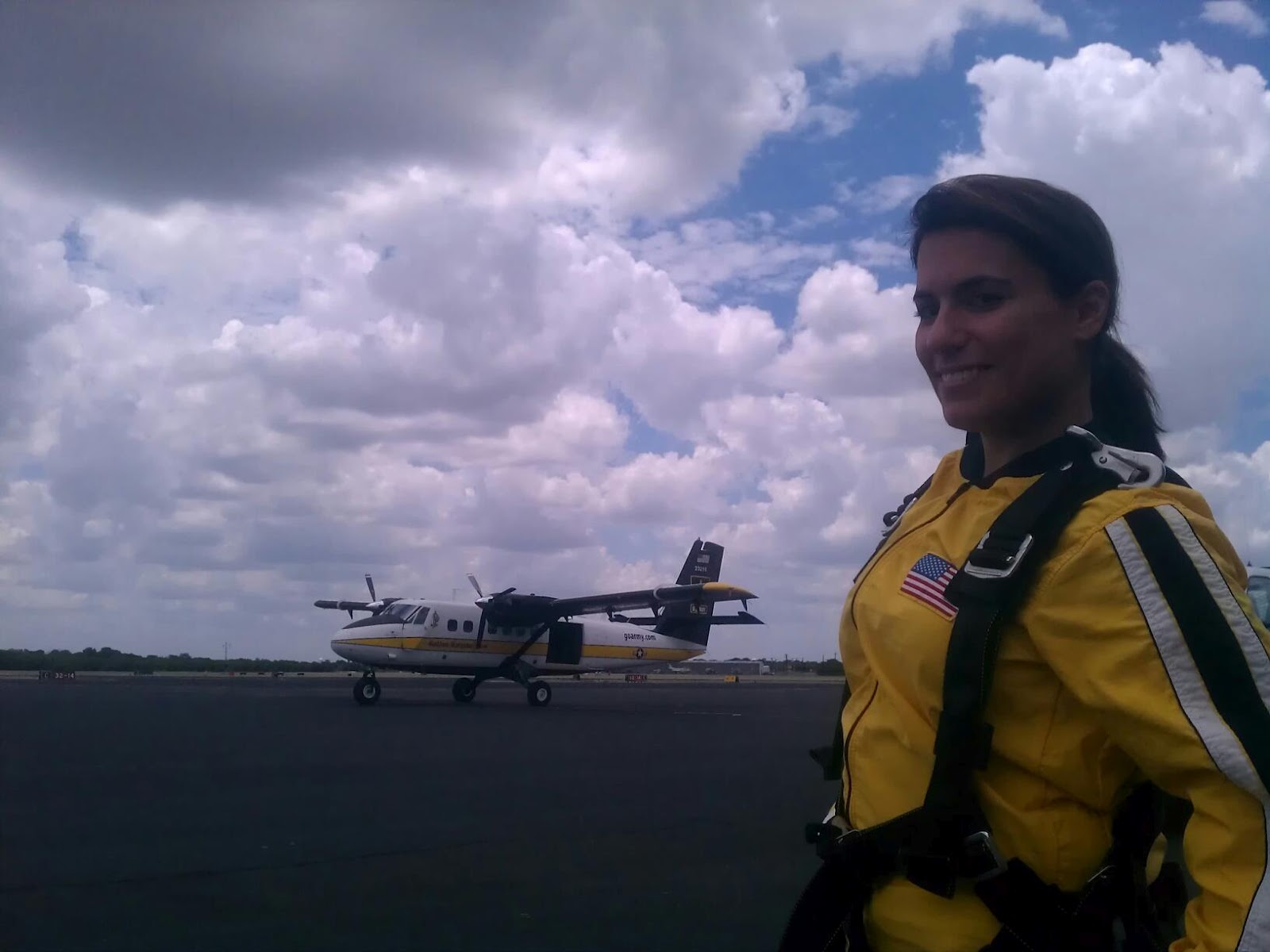
Major lesson: DO NOT WISH AWAY EXPERIENCES! I initially prayed for bad weather and a broken plane. Well, both happened right before it was my group's turn to go up. By karmic reprieve I was able to get on the manifest for the following day and had the experience of a lifetime! Check out the photos and videos for an external look at this incredible opportunity to jump with the Army's professional parachuting team, and my stab at a haiku to poetically describe the indescribable:

Wind rushing. Quiet
Falling. Abruptly floating.
Dream oblivion.


Thursday, June 14, 2012

Flying Providers!

This weekend I am off to attend the 2-day Army Medicine Experience Tour in San Antonio! Check out the list of the scheduled events with links to the highlights. For the latest updates, follow me on Twitter @OneDNP #AME12

Day One: Monday June 18th
0700: Welcome Breakfast with Major General David L. Mann
0900: Tour Brooke Army Medical Center and Center for the Intrepid at Fort Sam Houston
1245: Lunch at Fort Sam Houston Golf Course Club House with Major General Robert J. Kasulke
followed by Wounded Warrior presentation
1430: Army Medical Department Museum Tour and Army Medicine Q&A panel
1700: Experience San Antonio at will

Day Two: Tuesday June 19th
0600: Breakfast at will
0700: Depart for Stinson Airfield, Camp Bullis
0800: Tandem Jumps with the Golden Knights
1500: (if we survive) Health Professional Scholarship Program presentation, participant written reviews, film testimonials, and ravel claims
1930: Farewell dinner with Major General Jimmie O. Keenan


Friday, June 8, 2012

What Now?

The post-graduation elation has given way to the reality that I now have to use the education I have taken a couple of decades to acquire.  So, where does a DNP go from here?

For starters, I have to take the ANCC certification exam. Application was sent, the card was charged, and I am anxiously awaiting my approval to test. I will be provided a 90-day test window, and if all goes according to plan, I should be certified and licensed as an PMHNP in KY by August (and you know what I am going to do with that set of initials).  As soon as I get this piece of paper, I will create my study plan.

Next, a job. I already have my private practice doing what I do, but if I want to truly put theory into practice, I need to create my own psych-mental health residency in the form of employment. Thus far, I have ruled out MSN or DNP university positions. I have had interviews and opportunities, but frankly, the teachers I admire most are the ones that can back it up with a few years of clinical practice. As someone who preaches to my BSN students to "be the nurse you would want as your nurse," I have an obligation to "be the teacher I would want as my teacher." I am most interested in the VA and had an interview for a few positions this week. I did my own reflective journal on this, but will wait to hear one way or another before I post my thoughts on the experience.

The capstone is completed, and I want it published. Since the topic involved interdisciplinary research, it is a bit more difficult to find a home than it would be for straight nursing. I have a few ideas that I plan to explore this coming week.

Next week, I am jumping out of a plane with the Golden Knights as part of the Army Medicine Experience Tour at the Brooke Army Medicine Center.  The American Psychiatric Nurses Association  was kind enough to ask me to represent the organization and I am especially looking forward to learning about all the work they are doing with Traumatic Brain Injury and PTSD at the Center for the Intrepid.

Speaking of APNA, this September I was invited to take part in a task force on local chapter operations. I and a colleague will also be presenting a pre-conference session on integrating Traditional Chinese Medicine in the psych/mental health setting at the 26th annual convention in Pittsburg.

Phew, school might be over, but the learning and leadership is just beginning!


Sunday, April 22, 2012

Abstract Accepted!

Acupuncture News: Pushing the Point: Integrating Acupressure and Chi...: Integrative therapies are all the rage, particularly in psychiatric and mental health settings. It is an honor to be accepted for a pre-conference session at the American Psychiatric Nurses Association's 26th annual conference in Pittsburgh this November. Check out the abstract . . .

Tuesday, November 1, 2011

Highlights from APNA 25: Psych Nurses Have More Fun

This was my second year attending the American Psychiatric Nurses Association annual conference, and the experience again renewed my enthusiasm for live CEU events. There were plenty of excellent speakers, exhibition (sales) booths, and poster presentations, but that is not what makes this a must-do yearly event. It is the camaraderie within the profession and the fact psych-nurses know the importance of having a good time. Here are a few of my personal highlights.


Venue: Disneyland Hotel
An excellent location to blend education and fun. Although the place was under construction and wi-fi was a bit spotty, the staff managed to make it magical. We had an awesome renovated room in adventure tower with a view of the evening fireworks. Since we were not run ragged with sessions and the conference ended early on Saturday, there was plenty of time to explore downtown Disney and the parks without the need for car rental or long monorail/bus rides. There were excellent places to eat (Napa Rose for high-brow, Trader Sam's for sips and apps), wonderful spa (ask for Carlos), and a fine collection on shops with live music until 10 or later every night. There were plenty of pens and pads along with a good selection of breakfast and boxed lunch choices. And Pluto, of course!


Inspiration: Jean Watson
Her presentation Caring Science and Psychiatric Nursing: Relationship and Emergence of Human Spirit included a singing bowl meditation and an honest discussion on how PMH nurses can use authenticity, interconnectedness, and belonging as instruments of healing.  While speaking on esoteric topics is commonplace in my CAM conferences, I was delighted her powerful delivery made it into an area that does not like to stray far from evidenced-based practice. "Being" is not a concept easily researched through science!  Jean was referred to often throughout the rest of the conference - I gave her a nod in my presentation on the role social networking plays in world connectedness - and she had a huge line of folks waiting to shake her hand following her talk. I studied her middle-range theory of human caring in my MSN program, but there is nothing like a personal illustration by the creator to bring life to a concept that seems more simple and obvious on paper than it does in clinical practice. Watson Caring Science Institute


Mentorship: Pat Cunningham
My advisor won this year' award for excellence in practice and we whooped it up when they presented her award. What is amazing about Pat from a student perspective is her ability to individually listen to each of us, evoke the best practice and thought out of ourselves, and to use that blunt humor so characteristic of the best psych nurses. I imagine her patients feel the same way!


Trend: Integrative Therapies
Last year there were a few posters that addressed CAM use by nurses and I was excited, but this year saw an explosion! Mindfulness training, supplement and nutrition use, and schools of nursing integrating various CAM certifications as part of their psych-np programs are just some of the new blends of therapies to benefit our patients.  I found out one of my current teachers has been using hypnotherapy with some of her pediatric clients and a former psychiatrist colleague has been instrumental in establishing integrative practices in the Long Beach VA's mental-health program. I am excited that the future may hold a number of niches I fit into without having to carve them out on my own. There may be opportunities to expand NP ability to practice certain CAM therapies as part of their scope of practice similarly to how MDs already have, and I would love to be a part of making that happen.


Coolest Product: Mindability
This product was cool for 2 reasons. First, all the promo literature was on a flash drive that I was able to use to store my presentation when I could not find mine (it resurfaced in my backpack yesterday). Second, the rep gave me a fun wallet card targeted to control emotional reactions. It included some great phrases such as:
  • "If I'm reading this, it means I'm more upset than is good for me."
  • "However I'm feeling is exaggerated"
  • "Whatever I am thinking is distorted." 
  • "Whatever I'm thinking about saying or doing, DON'T, until I calm down."

If reality TV stars had these in their pockets, there would be no reality TV stars! In all seriousness, this brought out a new idea for PTSD group I hope to use during clinical soon.


International Perspective: Holland
While a group of use were relaxing by the pool area in between sessions, a fellow nurse from Holland decided to sit and chat with us. I found it interesting that while the US is trying to establish mental health parity, in Holland, they have decided those with mental illness will now have to pay over-and-above the standardized government health insurance rate for supplemental coverage if they want psychiatric services. We also had an interesting conversation about different nursing roles and marijuana bars.


Obligatory Gala: California Dreamin'
Hosted on Adventure lawn, the Friday night reception was included in the conference registration rather than having to purchase separately. An excellent buffet and cash bar (boo!) was well staffed, and the all-dentist band made for a wild evening. The dance floor was defiantly too small for this crew as all-ages crowded it and boogied down. Later we went to my room for a wine tasting wind down that resulted in one of my classmates deciding to commit to the ascot. Pittsburgh better watch out in 2012!


Friday, October 21, 2011

APNA Presentation & Resource List

Uploaded to slide share and ready to view! Well, except my cool social-media sun did not transfer over well.Please remember to take the survey: Social Networking and Mental Health Providers

Resources
ANA's Social Media Toolkit - What every nurse should know

Health Vault - The possibilities for collaboration and consultation are encouraging

VA Directive 6515 (Social Media Policy)

Healthcare Communications & Social Media #hcsm Sunday's at 9pm EST

People Say I'm Crazy John Cadigan, schizophrenia patient, movie maker, twitter junkie

Google Privacy Center  An excellent primer

Facebook Privacy The place to update your settings

Friday, September 23, 2011

Research for Capstone Research

I am currently developing a survey for my DNP capstone project to examine usage trends and perspectives on social media within a number of psychiatric healthcare disciplines.  I am looking into a number of online survey sites to determine which one provides the most feature with the lowest (free?) cost.  It seems there is not one company that dominates the Doctorate student market, but if anyone has a great experience with a particular company, I would love to hear about it! Here are the links:

QuestionPro

SurveyShare

FluidSurveys

SurveyMonkey

SocialSci

SurveyGizmo

PsychData

LimeSurvey

I hope to have the survey up and distributed via a number of social media platforms and professional organizations by the APNA conference in October.  Check back soon!

Wednesday, July 27, 2011

"I'm Going to Disneyland!"

I am officially registered for the APNA conference . . . a good thing since I am presenting!


3011: Social Networking for Psychiatric and Mental Health Nurses
Jaclyn Engelsher, RN-BC, APRN, FNP-BC, DOM; Tanitha Moncier, FNP
Abstract
Social networking, a relatively new communication phenomenon, has the ability to provide education, foster advocacy, promote the profession, and influence mental health policy. It also has the potential to violate boundaries, infringe on privacy, create liability, and damage professional credibility. A review of the literature revealed limited research has been conducted concerning the impact and use of social networking sites in nursing practice and other healthcare disciplines. In 2010 the ANA issued an informal resolution regarding use of social media in keeping with the Code of Ethics and called for additional study.
In Psychiatric/Mental Health Nursing, communication is the foundation of the therapeutic alliance. Because social networking communications have the potential to positively and negatively affect this alliance, it is imperative to develop guidelines for prudent and resourceful usage of social networking media that complies with practice acts, promotes professionalism, and maintains work-life balance for the psychiatric mental health nurse. This session will provide an overview of different types of social media outlets, review published position statements from other healthcare disciplines, and consider best practices for Psychiatric/Mental health nursing.


After looking at the schedule, I wish I was multi-planer because there are a lot of interesting topics going on at the same time including a military specific track, integration of mental and physical healthcare practice, and use of complementary modalities from music making to use of heavy quilts as a comfort measure for depression. I must admit, I am hope the LACE discussions are as lively as they were last year. I love a good nurse fight (getting it out is far better mentally and much more entertaining then letting angst fester into lateral violence later on!).

Tuesday, November 2, 2010

What It Is, and Where Its At!

Here it is, the big, bad, position statement that has caused a lot of nurses to be very, well "nursey." The gist is, the psych CNSs and NPs competencies are nearly identical. Even though the CNS is 30 years older, the "NP" designation is the most publicly and professionally understood (using "understood" pretty loosely here). While the ANCC backs APRN as the single advanced practice nursing psych credential of the future, the APNA wants to ensure the CNSs who do not go back for their APRNs maintain their scope of practice and level of reimbursement.


The burgeoning mental health needs of the population demand access to highly qualified providers. Psychiatric Mental Health Advanced Practice Nurses (PMH-APRN) include both the Clinical Nurse Specialist and Nurse Practitioner. Both are prepared at the graduate level in research, systems, and direct patient care to provide psychiatric evaluations and treatment, including psychopharmacological interventions and individual, family and group therapy, as well as primary, secondary and tertiary levels of prevention across the lifespan. They are a vital part of the workforce required to meet increasing population mental health needs.


The PMH-CNS certification began in 1974. The introduction of the Psychiatric Nurse Practitioner certification examinations in the early 2000s created confusion regarding the scope of practice of the Psychiatric CNS and NP. This further became confounded with variances in state licensure and titles.


The position of the American Psychiatric Nurses Association is "psychiatric advanced practice nurses, whether they practice under the title of CNS or NP, share the same core competencies of clinical and professional practice. While the individual APRN-PMH may actually implement portions of the full scope and practice based on their role, position, description, and practice setting, it is importantly, the full breadth of their knowledge base that informs their practice." (Psychiatric-Mental Health Nursing: Scope and Standards of Practice (ANA, APNA, ISPN, 2007).


The following data lend further support to this position:

  • The Essentials of Master's Education for advanced practice nursing requires the same core courses for both titles (AACN, 1995).
  • The American Nurses Credentialing Center and the American Psychiatric Nurses Association conducted a Logical Job Analysis of the PMH-CNS and PMH-NP in 2005. Analysis of the existing role delineation studies of the PMH APRN revealed 99% of the identified competencies were shared between the two titles (Rice, Moller et. al., 2007, p.157).
  • The ability of Psychiatric Mental Health Clinical Nurse Specialists to have title rights, prescriptive authority and direct care billing of CPT codes began in 1978 in the Pacific Northwest and has extended to 37 states and the District of Columbia.
  • Medicare continues to reimburse ANCC certified Psychiatric Clinical Nurse Specialists for any CPT codes related to evaluation and treatment. Certified Psychiatric Nurse Practitioners were added in 2007.

Friday, October 15, 2010

Thursday-Night-Fight Highlights


Laaaaaadies and Gentlemen! In this corner, weighing in at 30% of the advanced practice nursing psych professionals wearing APRN badges. In this corner we have 70% of the advanced practice nursing psych professionals wearing CNS badges. And our referee tonight is the general public wearing a hospital gown and bracelet reading "so you are a nurse with a some extra training or something?" This is a mortal combat match. The winner of this round will face off against the biggest opponent to advancement and awareness of nursing practice - no, it is not the AMA, it is a giant mirror.

Now that I got that off my chest . . .

I get it. If I were a CNS with a decade or more of practice I would feel invalidated by the position that the NP will be the basis for advanced practice nursing. I would feel "there are more of us than their are of you, so you should change to OUR title." I would be nervous that, without having the NP designation after my name, that I will loose parts or all of my ability to practice. And I would feel resentful that after thousands of hours of clinical work, I may have to go back to school and take another damn standardized test, not to continue practice, but to have all my bases covered.

Yep, I would have a big fat chip on my shoulder.

Nevertheless, I believe merging the CNS and APRN role into one designation in the future (not retroactively - some folks got stuck on that argument 8-track and couldn't get off no matter how many times the phrase, "not for those currently in practice, this is for those coming in the future" was used) and focusing on lifespan rather than specialty populations makes good sense for several reasons.

Consumer
  • "So a nurse practitioner you see for colds, but the serious stuff like blood pressure you need a doctor."
  • "You guys are like physicians assistants just without the science background, right?"
  • "Oh yeah, my daughter is an RN - are you going to go for that when you are done?"
We have enough problems trying to explain our "mid-level provider" role to the public without having to explain several of them. Heck, I never heard of a CNS before nursing school and am still not entirely sure what the difference is between NPs and CNSs outside of psych. The argument that we just need to keep all the credentials separate and let the public slowly adjust is illogical - the public has already had a few decades and it has not assimilated. People are busy enough without having to figure out a myriad of differing professional credentials that essentially mean the same thing.

When the provider is lifespan educated, all doors to practice are open even if you want to specialize in a particular population or psych disorder. This way, a patient who started seeing their provider at 14 can keep seeing them into their 30s if both agree it is in the patient's best interest.

Moreover, we need image control. The good-old-boys medical network presents a cool, calm, collected front of intellectuals. We present a hormonal, defensive, fragmented group of providers who maybe were not smart enough to be doctors. Seriously, chiropractors encroach on the MD conscripted "doctor" title and get nearly no political flack for it because even their smarmy ethics get more respect than our uppity-handmaiden persona. The ANA needs a PR firm - it would probably enhance what our lobbyists do 10-fold.

Parity
I have argued this from the DNP angle ad nauseam. If the DNP is the single designation for advanced practice by the time all of us have returned to the dust, I feel we have done our job. In the meantime, the NP role in the psych multidisciplinary team has established itself well in the decade it has been in existence. Our peers in other specialties are phasing out the CNS as the NP becomes the dominant degree, and while psych does tend to be slow to adopt change, there is no need to separate ourselves for the sake of preserving a title. Other professions, like the MD and the PsychD and the DPT, may have specialty focus beyond their core training, but their is no role confusion or use of multiple credentials within the same education levels as there is with nursing. Being different is great if you are in the business of fashion or retail or sports, but in healthcare, conformity is a good thing - Iit fosters "brand awareness."

Finances
It costs a lot of money to create certifications exams and state licensing. The less there are, the less expensive the fees will be. Or slower the fees will rise, at any rate. I imagine testing may evolve to some sort of module model at some point, but in the meantime streamlining is more cost effective and can result in greater speed and delivery of the application, testing, and certification process.


Unity
If nurses run the healthcare system, nobody seems to know it. Stratified as we are, unity through every educational level of the profession is a challenge, but it is attainable and it has to come from the "top" down. We must make our scope and standards clear in order to lobby for uniform advance practice rights in EVERY state. We cannot accomplish this with 31-flavors of advanced practice nursing.

I do not endorse the medical practice model, however I do endorse the medical designation model of one, all encompassing practice credential. I also believe the generalist-to-specialist education model provides a solid foundation to which all of us can relate to. I would not go so far (yet) as to say all of us need to be FNP certified first before becoming CNMs or CRNAs, but we should have a good chunk of our didactic education the same as well as some form of uniform clinical component.

Ultimately, we need to do whatever is necessary to result in full autonomy and the elimination of physician oversight of our profession. This strength will allow us to advocate for RNs and LPNs who we must still consider our professional responsibility to promote and protect. Our stratification is unique compared to other health care disciplines - we decide if it works to our advantage or our demise.